

Why Lash Glue Temperature & Humidity Matter (And How to Get It Right)
AULKQuick Answer: Lash glue cures fastest and strongest between 20-25°C (68-77°F) and 45-60% relative humidity. Below that range, glue cures too slowly and bonds weakly. Above it, glue cures too fast, skins over, and can irritate clients' eyes. A basic digital hygrometer is the easiest way to track this in your studio.
If you've ever had a batch of lash extensions fall off within days—or watched your glue turn white and cloudy for no obvious reason—the problem probably isn't your technique. It's almost always temperature and humidity.

Lash glue doesn't dry the way people assume. Understanding what's actually happening inside that bottle will change how you store it, how you use it, and how consistent your retention becomes.
How Lash Glue Actually Cures
The Role of Cyanoacrylate
Eyelash extension adhesive is made from cyanoacrylate, the same chemical family as super glue. It doesn't cure by "air drying" or evaporation the way water-based glue does. It cures through a chemical reaction, and that reaction needs a specific trigger to get started.
Why Humidity Isn't the Enemy—It's the Trigger
That trigger is moisture in the air. This is the part most lash artists get backwards: low humidity doesn't make glue "safer" or "more stable." It just means there isn't enough moisture around to activate the reaction properly. Humidity isn't something to avoid—it's the thing that makes the glue work at all.
How Temperature Speeds Up or Slows Down the Reaction
Temperature plays a supporting role. It doesn't trigger the reaction, but it affects how fast the reaction moves once humidity has started it:
- Too cold, and the reaction slows down, leading to weak, incomplete bonds
- Too warm, and the reaction speeds up too much, causing the glue to skin over before it fully cures
Glossary: RH, Tack-Free Time, Full Cure — What These Terms Actually Mean
A few terms come up constantly in lash glue discussions, and they're worth defining plainly:
- RH (Relative Humidity): The percentage of moisture in the air relative to the maximum it could hold at that temperature. It's the same number you see on a weather app, just measured for your room instead of outdoors.
- Tack-free time: How long it takes for the glue surface to stop feeling sticky—usually a few seconds. This is what most people mean when they say "dry time."
- Full cure time: How long it takes the adhesive to complete its chemical bond all the way through—typically 24-48 hours. This is the number that actually determines retention.
The Ideal Range for Lash Glue
Most professional lash adhesives are formulated to perform best within:
- Temperature: 20-25°C (68-77°F)
- Humidity: 45-60% RH
Outside this range, you'll start to see problems—even with a high-quality glue.
Drying Time by Humidity Level
| Humidity Range | Effect on Drying Speed | What You'll Notice |
|---|---|---|
| Below 30% | Severely under-activated | Glue stays tacky, weak bond, stickies |
| 30-45% | Slower than advertised | Longer working time, but higher risk of poor placement |
| 45-60% (ideal) | Matches advertised drying speed | Predictable cure time, best balance of control and bond strength |
| 60-70% | 1-2x faster than advertised | Shorter working window, higher skill required |
| Above 70% | Over-activated / shock cure | White residue, brittle bond, poor adhesion |
Exact drying times vary by adhesive formula and brand—always check your specific product's manufacturer guidelines. The ranges above reflect general patterns across most professional cyanoacrylate-based lash adhesives.
Temperature's Role in Cure Speed
| Temperature | Effect |
|---|---|
| Below 18°C (65°F) | Cure slows significantly; glue may feel "runny" and never fully set |
| 20-25°C (68-77°F) — ideal | Most predictable, consistent cure time |
| Above 24-25°C (75°F+) | Risk of shock-curing on contact; poor wrap, brittle bond |
What Happens Below 45% Humidity
The glue doesn't have enough moisture in the air to fully activate. Cure time drags on, the bond stays weak even when the surface looks dry, and retention suffers even if your application technique was perfect.
What Happens Above 60-70% Humidity
The reaction speeds up too much. Glue can skin over at the tip before you've finished placing the lash, cutting your working time short. Past 70%, the glue can shock-cure—reacting so fast that it produces white residue and a weaker, more brittle bond instead of a strong one.
Does the Ideal Range Change by Glue Brand or Type?
Yes. Fast-drying formulas (1-2 second cure) are typically calibrated to perform within a narrower humidity band, while slower formulas (3-5 second cure) tend to have a bit more tolerance for drift. Always check the manufacturer's specific guidelines rather than assuming every bottle behaves the same way at 50% humidity.
Common Symptoms and What They Actually Mean
Glue Won't Dry / Stays Tacky
Likely cause: Humidity too low. Fix: Use a humidifier or place a cup of warm water near your station.
Glue Tip Crusts Over Quickly
Likely cause: Humidity too high, or the bottle has been left open too long. Fix: Add a dehumidifier, shorten cap-off time, and replace glue more often.
White Fuming and Client Eye Irritation
Likely cause: Humidity too high combined with poor ventilation. Fix: Improve airflow, use a fan, and lower room humidity.
Inconsistent Bond Strength Day to Day
Likely cause: Fluctuating temperature and humidity. Fix: Keep a hygrometer at your station and monitor conditions before every appointment.
Quick Troubleshooting Table
| Symptom | Likely Cause | What to Do |
|---|---|---|
| Glue won't dry / stays tacky | Humidity too low | Humidifier or a cup of warm water nearby |
| Glue tip crusts over quickly | Humidity too high or bottle left open | Dehumidifier, shorter cap-off time |
| White fuming, client's eyes watering | Humidity too high + poor ventilation | Improve airflow, lower humidity |
| Inconsistent bond strength | Fluctuating temp/humidity | Monitor with a hygrometer |
Why Cure Time Matters as Much as Humidity
Tack-Free Time vs. Full Cure Time
Tack-free time is how long the surface takes to stop feeling sticky. Full cure time—typically 24-48 hours—is how long the adhesive takes to complete its bond all the way through. These are two different timelines, and confusing them is one of the most common mistakes in the industry.
Why Clients Need to Avoid Water for 48 Hours
This is exactly why lash artists tell clients to avoid water for 48 hours after their appointment. The lashes look set, but the bond underneath is still finishing its reaction. Water exposure during this window can break that bond before it's complete—one of the most common causes of early, unexplained shedding that gets blamed on "bad glue" or "bad technique" when it's neither.
Fast-Drying vs. Slow-Drying Glue: Which Should You Use
Faster-drying glues (1-2 second cure) let you work through more clients per day, but leave less room for adjustment.
How Experience Level Should Affect Your Glue Choice
New lash artists often start with a slower 3-5 second glue to reduce clumping and misdirection while building speed and control. As technique and confidence improve, moving to a faster-curing glue can increase daily client capacity without sacrificing quality.
How to Actually Measure Your Workspace
What "45-60% RH" Means in Plain Terms
RH just means the concentration of water vapor in the air, measured against what that air could hold at its current temperature. It's the same number you already see on a weather app—except you need to measure it indoors, at your own station, since heating and air conditioning can make your room very different from the outdoor reading.
Choosing a Hygrometer (Basic vs. Smart Options)
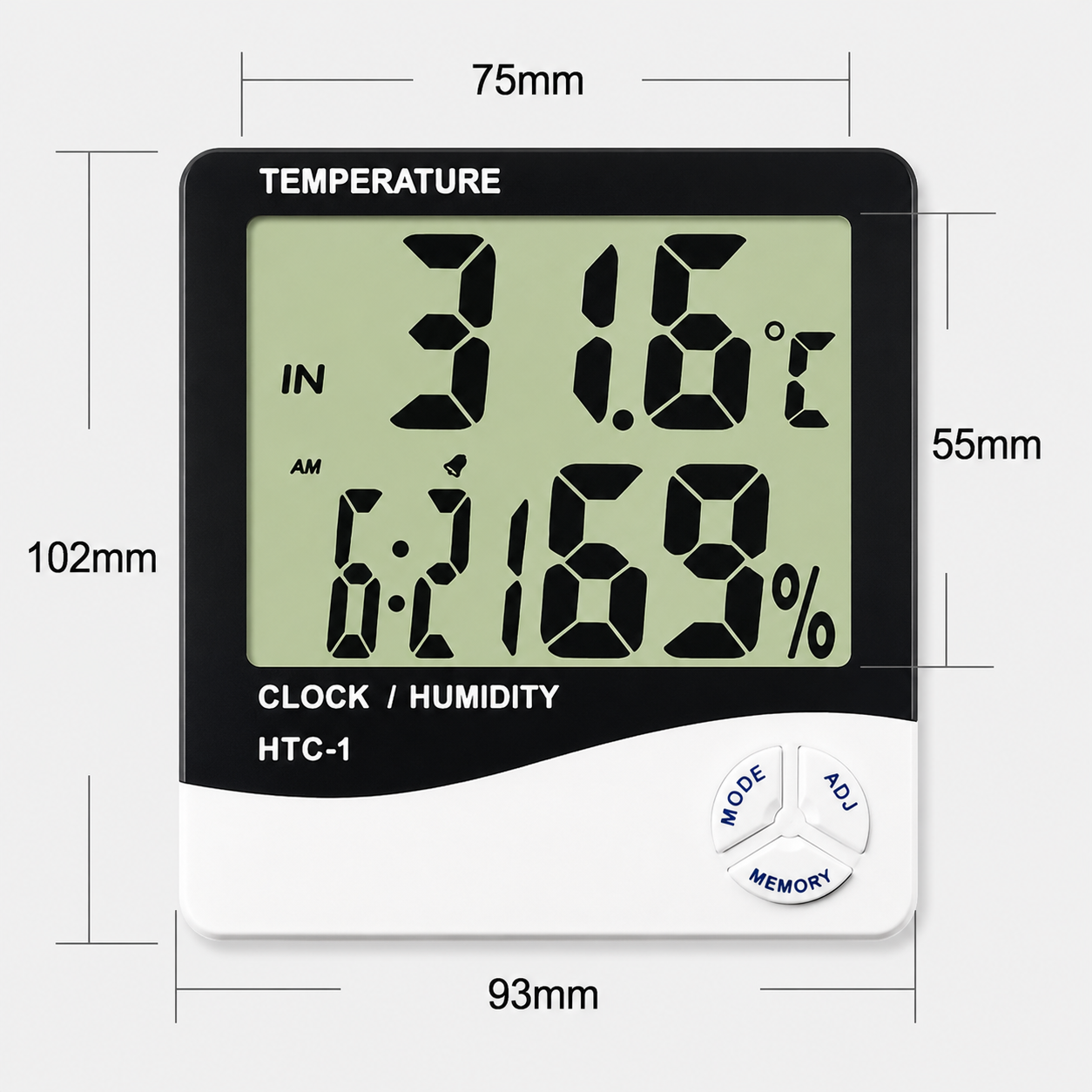
You don't need a professional-grade instrument. A basic digital hygrometer/thermometer combo, widely available for around $10-15, displays both temperature and humidity clearly and is accurate enough for lash work. If you run multiple rooms or a larger studio, a smart hygrometer with app connectivity lets you track historical trends and get alerts when conditions drift outside your target range.
Where to Place It in Your Studio
Keep it at or near your station—not by a window, door, or air vent, where readings can be skewed by drafts. A shelf or cart near your workspace gives the most accurate picture of the air your glue is actually curing in.
How Often You Should Check It During a Workday
A quick glance before your first client, and again if you notice the weather shifting (rain moving in, heating kicking on) is usually enough. Studios in climates with big daily swings may want to check mid-day as well.
Climate and Seasonal Considerations
Working in Dry/Arctic Climates
Dry climates and heated indoor air in colder regions can push humidity well below the ideal range. A humidifier running near your station—even a small desktop one—can make a noticeable difference in cure consistency.
Working in Humid/Tropical Climates
In naturally humid regions, ambient humidity can regularly sit above 60-70% RH, especially without air conditioning. A dehumidifier or well-placed AC unit helps keep your workspace inside the ideal band instead of letting the glue cure too fast.
Adjusting for Winter Heating vs. Summer Humidity
Indoor heating in winter dries the air out fast, even in climates that feel humid outdoors. Rainy or humid seasons push the opposite direction. Knowing which way your specific space tends to drift lets you correct for it proactively instead of reacting after a bad retention day.
Portable Humidifiers/Dehumidifiers Worth Considering
Small desktop humidifiers and dehumidifiers designed for single rooms are usually enough for an individual lash station—you don't need industrial equipment to keep a small workspace within range.
How Long Does Lash Glue Actually Last? (Shelf Life)
Temperature and humidity don't just affect performance during application—they also determine how long a bottle stays usable before it's even opened.
Unopened Bottle Shelf Life
Typically lasts 3-6 months when stored correctly. For factories and warehouses, refrigeration at 3-7°C (37-45°F) keeps the adhesive "dormant." Bottles should return to room temperature before shipping or use.
Opened Bottle Shelf Life
This is where most shelf life disappears. The moment the cap is opened and the adhesive is exposed to ambient moisture, usable life drops to just 4-6 weeks (8 weeks maximum)—regardless of how fresh it was before opening.
| Bottle Status | Shelf Life | Storage Recommendation |
|---|---|---|
| Unopened | 3-6 months | Refrigerate at 3-7°C (37-45°F); return to room temp before use |
| Opened | 4-6 weeks (8 weeks max) | Store upright, sealed, away from light — do not refrigerate |
Why You Should Never Refrigerate an Opened Bottle
Moving an opened bottle in and out of the fridge creates temperature swings that cause microscopic condensation to form inside the bottle. That trapped moisture triggers premature curing from the inside out, ruining the bottle before you get to use it up.
Signs Your Glue Has Already Expired
Watch for: noticeably slower drying than usual, a change in color or consistency (cloudy or thickened), a stronger-than-normal odor, or visibly weaker bond strength during application even under normal conditions. Any of these are a sign to replace the bottle rather than push it further.
How to Extend Your Opened Glue's Usable Life
Using a Vacuum-Sealed Storage Tank
Since opened adhesive only has 4-6 weeks before it starts losing potency, minimizing air exposure between uses is the single biggest thing you can control. A vacuum-sealed glue storage tank works by pushing air out of the container each time you close it, creating a negative-pressure seal around the bottle. This cuts down on the ambient moisture reaching the adhesive between appointments—the exact mechanism that shortens shelf life once a bottle is opened.

Daily Habits That Reduce Air Exposure
- Press the seal button every time you close the tank, even for a quick reopening mid-appointment—every bit of air exposure adds up
- Store the sealed tank in a cool, dry spot away from direct sunlight, not the fridge
- Most tanks hold multiple bottles at once, so you can seal your full daily rotation together instead of leaving bottles exposed on your station
Buying Smaller Bottles vs. Bulk—Which Actually Saves Money
A larger bottle looks cheaper per milliliter, but if you can't use it within 4-6 weeks of opening, the unused portion is wasted money. For solo lash artists or slower-moving studios, buying smaller bottles more frequently often works out cheaper in practice than bulk bottles that go stale before they're finished.
Practical Tips for Managing Your Work Environment
Seasonal Adjustments (Winter Heating vs. Humid Seasons)
Heating in winter drops indoor humidity fast; rainy or humid seasons can push it too high. Know which direction your space tends to swing and correct for it.
Minimizing Cap-Off Time
Every second the bottle is open, it's absorbing ambient moisture and starting to cure at the tip. A vacuum-sealed storage tank helps extend this window between uses.
Proper Storage Between Appointments
Store glue upright, sealed, and away from light. Shaking or unnecessary air exposure introduces moisture and speeds up degradation before you've even used it.
A Simple Daily Checklist Before Your First Client
- Check your hygrometer reading before setting up
- Adjust humidifier/dehumidifier if you're outside 45-60% RH
- Confirm your glue hasn't passed its opened-bottle shelf life
- Seal your storage tank after grabbing today's bottles
A Note for Wholesale and Bulk Buyers
Why Storage Conditions Matter Before the Bottle Is Opened
If you're stocking up on glue for a salon or team, storage conditions matter even before the bottle is opened. Adhesive stored in a hot, humid warehouse or during transit can start losing potency before it ever reaches your station—regardless of the expiration date on the label.
Ordering Smaller Batches vs. Stockpiling
This is one reason we recommend ordering in smaller, more frequent batches rather than stockpiling months of inventory at once. Fresh glue, properly stored, will always outperform older stock that's been sitting through temperature swings—no matter how good the brand is.
What to Ask Your Supplier About Storage Conditions
Before placing a bulk order, it's worth asking your supplier how the product is stored prior to shipping (refrigerated vs. ambient warehouse), how long it typically sits in inventory before dispatch, and what shipping method is used—glue that travels through extreme heat during transit can arrive already partially degraded.
Frequently Asked Questions
Does humidity really affect how long lash extensions last?
Yes. Humidity outside the 45-60% RH range affects how completely the adhesive cures, which directly impacts how long extensions hold before falling out naturally.
Can I use a humidifier at my lash station?
Yes, a small desktop humidifier is a common and effective way to raise humidity in dry rooms or during winter heating season.
What's the ideal room setup for lash glue performance?
A room held between 20-25°C (68-77°F) and 45-60% RH, with a hygrometer at the station to monitor conditions and adjust with a humidifier or dehumidifier as needed.
Does every glue brand have the same humidity requirements?
Not exactly—formulas vary, and faster-curing glues tend to have a narrower ideal range. Always check your specific product's guidelines rather than assuming a universal number.
Can I speed up drying time without changing humidity?
Not reliably. Cure speed is primarily driven by humidity and, to a lesser extent, temperature—technique and product choice matter, but they can't fully substitute for the right environmental conditions.
Is a smart hygrometer worth it over a basic one?
For a single station, a basic model is usually enough. Smart hygrometers make more sense for larger studios or multiple rooms where tracking trends and getting alerts saves time compared to manually checking each space.
Related Reading
If you're setting up your station's environment, our guide on [choosing a digital hygrometer for your lash studio →] walks through exactly what to look for. For glue that's already opened, our vacuum-sealed storage tank → is designed specifically to extend usable life between appointments. And if you're deciding which curl or adhesive viscosity pairs best with your client's natural lashes, our [lash curl guide →] covers that in detail.