

How to Clean, Sterilize & Maintain Your Lash Tweezers
LashFad
Your tweezers are the most important tools on your lash table. A precise tip means clean isolation, perfect fans, and faster sets — but dried glue, residue, and skipped sterilization quietly ruin both your results and your tools. Knowing how to clean lash tweezers properly protects your clients, keeps your tips sharp, and saves you from replacing expensive tweezers every few months.
This guide walks you through everything: removing stuck-on glue, daily cleaning, full disinfection and sterilization (with and without barbicide), and the long-term care habits that keep your tweezers performing like new.
Why Cleaning Your Lash Tweezers Matters
It's easy to wipe your tweezers between clients and call it done — but cleaning lash tweezers properly is about three things at once:
Hygiene and client safety. Tweezers touch the eye area on every single client. Bacteria, leftover adhesive, and skin oils build up fast, and without real disinfection you risk cross-contamination and eye irritation. Proper sterilization is non-negotiable for any professional lash artist.
Tip precision. Even a thin film of dried glue throws off your closure. Tips that no longer meet cleanly can't pick up fine fans or isolate a single lash — which slows you down and frustrates you mid-set.
Tool longevity. Quality tweezers are an investment. Harsh handling and glue corrosion shorten their lifespan; consistent, gentle cleaning makes a good pair last for years.
What You'll Need
Before you start, set up a small cleaning station with:
- A glue remover or acetone-free tweezer cleaning solution for dissolving dried adhesive
- 70% isopropyl alcohol or a salon-grade disinfectant
- Barbicide (optional — alternatives below)
- A lint-free wipe or cotton pad
- A clean towel and a safe spot to air-dry
- A tweezer holder or stand for storage afterward
How to Get Glue Off Lash Tweezers
Dried adhesive is the number one reason tweezers stop closing properly, so this step comes first. Never scrape glue off with a blade or your nail — you'll scratch or bend the tips permanently.
- Soak the tip. Dip the glued end into a tweezer cleaning solution or apply a small amount of glue remover to a lint-free pad.
- Let it dissolve. Give it a few seconds to break down the adhesive — don't force it.
- Wipe in one direction. Gently wipe from the base toward the tip, following the shape of the tweezer. Repeat until the residue lifts away.
- Avoid the joint. Keep remover away from the hinge/tension point so you don't loosen the closure over time.
For everyday buildup, a dedicated cleaning solution with a built-in sponge makes removing lash glue off tweezers quick — just dip, pinch, and wipe between clients.

How to Clean Lash Extension Tweezers (Daily Routine)
Once glue is removed, a quick daily clean keeps oils and debris from accumulating:
- Wipe the entire tweezer — tips, body, and grip — with a lint-free pad dampened with 70% isopropyl alcohol.
- Pay attention to the tips, where product collects most.
- Let them air-dry completely before your next client or before disinfecting.
This light routine between every client is the foundation of good tweezer hygiene; the deeper sterilization below should happen at least daily.
How to Disinfect & Sterilize Lash Tweezers
Cleaning removes visible debris. Disinfecting and sterilizing kill the bacteria you can't see — and this is what separates a hobbyist from a professional. Here are your options:
Barbicide soak. The salon standard. Mix barbicide per the label instructions, fully submerge your cleaned tweezers for the recommended time (usually around 10 minutes), then rinse and air-dry. Always clean off glue and debris before soaking — disinfectant can't penetrate a layer of dried adhesive.
How to disinfect lash tweezers without barbicide. No barbicide on hand? You have good alternatives:
- 70% isopropyl alcohol — wipe thoroughly or soak briefly, then air-dry. Convenient and effective for everyday disinfection.
- Medical-grade disinfectant wipes rated for tools.
- UV sterilizer box — a chemical-free option that's gentle on your tweezers and great as a final step.
- Autoclave — true sterilization if you have access to one; check that your tweezers are autoclave-safe first.
Whichever method you choose, the order is always the same: remove glue → clean → disinfect/sterilize → dry → store. Skipping the cleaning step makes sterilization far less effective.
How to Care for & Maintain Your Lash Tweezers
Sterilizing keeps them safe; smart maintenance keeps them sharp. A few habits make all the difference:
- Never let glue dry on the tips. Wipe after every client — dried adhesive is the fastest way to wreck precision.
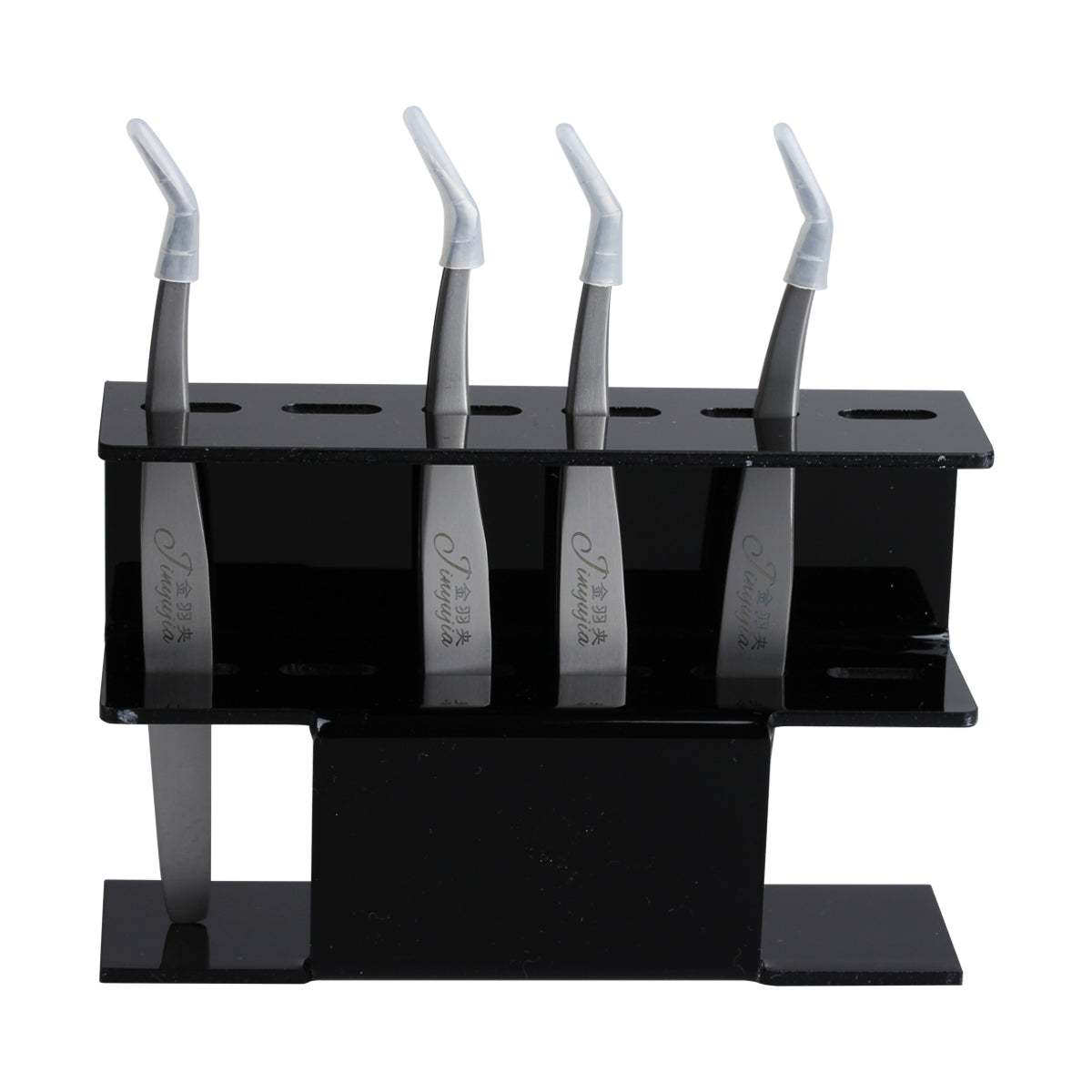
- Store them tip-up and protected. Loose tweezers in a drawer get bent and dulled. A dedicated tweezer stand keeps the delicate points from touching anything.
- Handle the tips with care. Don't tap them on hard surfaces or use them to scrape — even small bends ruin closure.
- Inspect regularly. Check that the tips still meet perfectly. Slight misalignment can sometimes be corrected gently, but badly bent tips usually mean it's time to replace.
- Keep a backup pair. Rotating between two pairs gives each one time to dry fully between sterilization cycles and extends their life.
Investing in well-made tools pays off here — durable, precision-tipped tweezers like Fadlash's fiber-tip lash tweezers hold their alignment far better through repeated cleaning and sterilization than cheap alternatives.
Mistakes to Avoid
- Scraping glue with a blade, scissors, or your nail
- Soaking tweezers in remover for too long (it can weaken the tension)
- Disinfecting over a layer of dried glue
- Tossing clean tweezers loose into a kit or drawer
- Skipping sterilization on "quick" appointments
Frequently Asked Questions
How often should I clean my lash tweezers? Wipe glue and residue after every client, and fully disinfect or sterilize at least once a day — more often in a busy salon.
Can I clean lash tweezers without barbicide? Yes. 70% isopropyl alcohol, tool-rated disinfectant wipes, a UV sterilizer, or an autoclave all work well as barbicide alternatives.
What's the best thing to use to remove glue from tweezers? A dedicated tweezer cleaning solution or glue remover — never a blade. It dissolves adhesive without scratching or bending the tips.
Can you bring lash tweezers on a plane? Generally yes — lash tweezers are small grooming tools and are typically allowed in carry-on luggage, but always check your airline's current rules before flying.
How do I keep my tweezers from rusting? Dry them completely after every clean, avoid leaving them soaking, and choose stainless steel tweezers designed to resist corrosion.
Keep Your Tools (and Your Sets) Flawless
Clean tweezers are the quiet secret behind fast, beautiful, hygienic lash sets. Build the habit — remove glue, clean, disinfect, dry, and store properly — and your tools will reward you with sharper precision and a much longer life.
Ready to upgrade your kit? Explore Fadlash's professional fiber-tip lash tweezers, keep them spotless with our tweezer cleaning solution, and store them safely on a tweezer stand.